
What a Technician Sees on These Calls
Most calls about garage door safety in homes with kids or pets don't start as safety calls. They start as "the door won't close all the way" or "it makes a weird noise and then goes back up." Once a technician gets eyes on the door, the real story usually comes out: a dog toy left under the track that the door didn't detect, a photo-eye sensor coated in pine dust and nudged out of alignment, or a garage remote that's been sitting on a low shelf within easy reach of a seven-year-old. None of these families thought they had a safety problem. They had a door that seemed to work fine right up until the moment it didn't.
What Actually Goes Wrong, and How Badly
A standard garage door weighs well over a hundred pounds, and a two-car door can weigh considerably more. The mechanisms that keep that weight from becoming a hazard are a handful of specific safety features, and each one can fail quietly:
- Auto-reverse failure. Every door made after the mid-1990s should stop and reverse when it meets resistance, and should also reverse using photo-eye sensors near the floor. If the force settings are off, worn, or set too high during a past repair, the door can keep closing on a child, pet, or object instead of stopping. This is the single biggest cause of serious garage door injuries, and it's entirely preventable with a two-minute test.
- Misaligned or dirty photo eyes. These small sensors sit a few inches off the ground on either side of the track and send an invisible beam across the opening. Heavy fall rain, blown pine needles, and the general moisture that collects around garages in this area can knock them out of alignment or leave a film on the lens. When that happens, the door may close even when something is crossing the beam, because the sensors aren't communicating properly in the first place.
- Pinch points on the panels. Older doors, especially ones installed before pinch-resistant designs became standard, have seams between sections that can catch small fingers as the door moves. This is a common source of minor but painful injuries, particularly with toddlers who like to "help" push the door.
- Easy access to openers and keypads. Wall-mounted buttons at child height, remotes left in reach, or older keypads without rolling code technology all make it easier for a kid to accidentally (or curiously) trigger the door while someone is in its path.
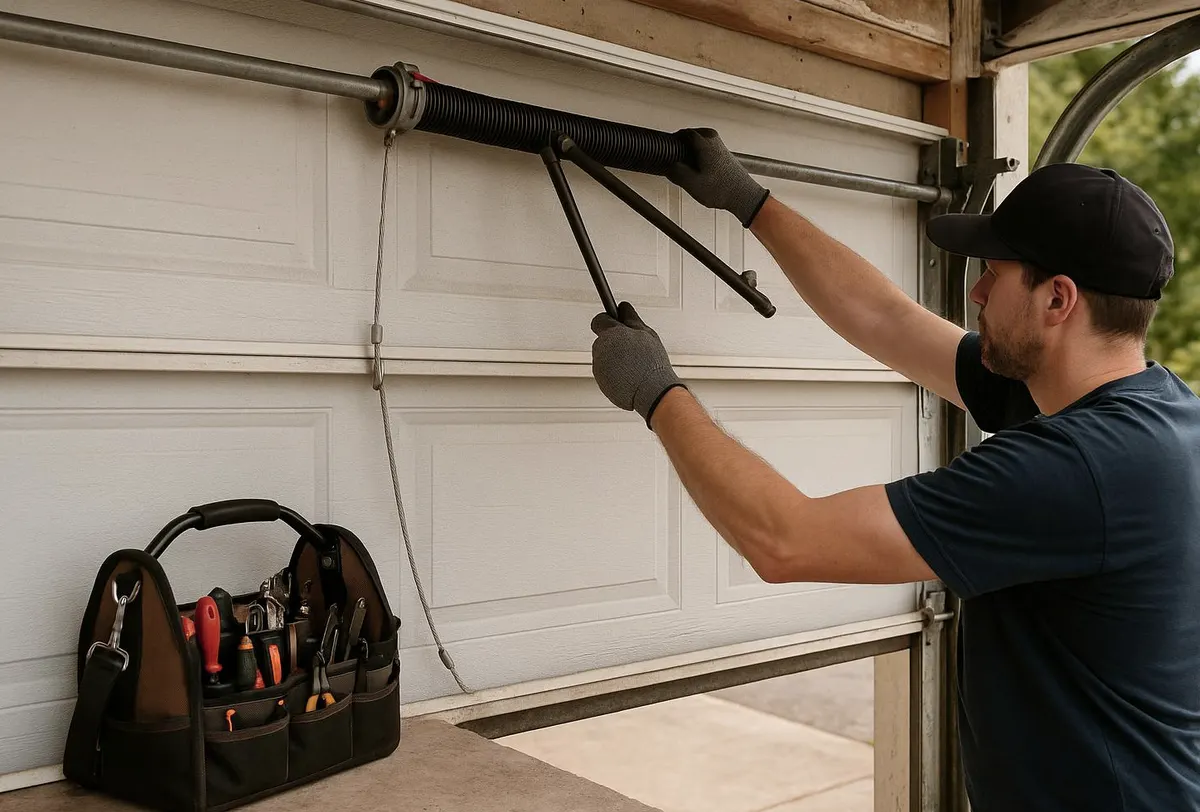
- Sudden cable or spring failure. A worn cable or a spring at the end of its life can snap without much warning, causing the door to drop fast rather than lower under control. This is less common day-to-day but far more severe when it happens, and it's more likely on doors that haven't had a spring inspection in years.
None of these are rare or exotic problems. They're the kind of thing that exists on a lot of driveways right now, just waiting for the wrong moment.
The Specific Steps That Actually Prevent It
Testing and awareness take a few minutes and cost nothing. Here's what actually makes a difference:
- Run the auto-reverse test monthly. Place a roll of paper towels or a 2x4 flat on the ground in the door's path and close the door normally. It should reverse immediately on contact. If it doesn't, stop using the opener until it's adjusted.
- Check the photo-eye sensors seasonally. Wipe the lenses clean and confirm the indicator lights are solid, not blinking, on both sensors. With pine debris and wind-blown rain common here in the fall, this is worth checking more often than most homeowners think, especially before winter when ice can also interfere with sensor performance.
- Move wall controls and remotes out of reach. Mount the interior button at least five feet up, and keep garage remotes off low shelves and out of cars parked in the driveway where kids can grab them.
- Set household rules about the door itself. No playing, standing, or letting pets linger under a moving door. It sounds obvious, but it's the rule that gets forgotten in the middle of loading groceries or chasing a dog back inside.
- Have pinch points assessed if your door is older. If you're due for a new door anyway, pinch-resistant panel designs are worth the upgrade when kids or pets are in the house.
- Get springs and cables inspected annually. A worn spring rarely announces itself clearly before it fails. Catching it early means a scheduled repair instead of a sudden, uncontrolled drop.
When to Call Arden Garage Door
If your auto-reverse test fails, your sensors won't stay aligned, or you're not sure your springs are safe to keep running on, that's the point to call in a technician rather than keep adjusting things yourself. Arden Garage Door handles both garage door repair and garage door maintenance visits that specifically check safety reversal, sensor alignment, and spring condition, and we can recommend pinch-resistant options if you're considering a new installation. We serve Arden, Asheville, Fletcher, Skyland, Hendersonville, Mills River, Weaverville, and Candler, and we're glad to walk you through what we find in plain terms.
If there are kids or pets in your house and it's been a while since anyone tested your door's safety features, give Arden Garage Door a call today. We'll check it properly and make sure it's doing what it's supposed to do.