
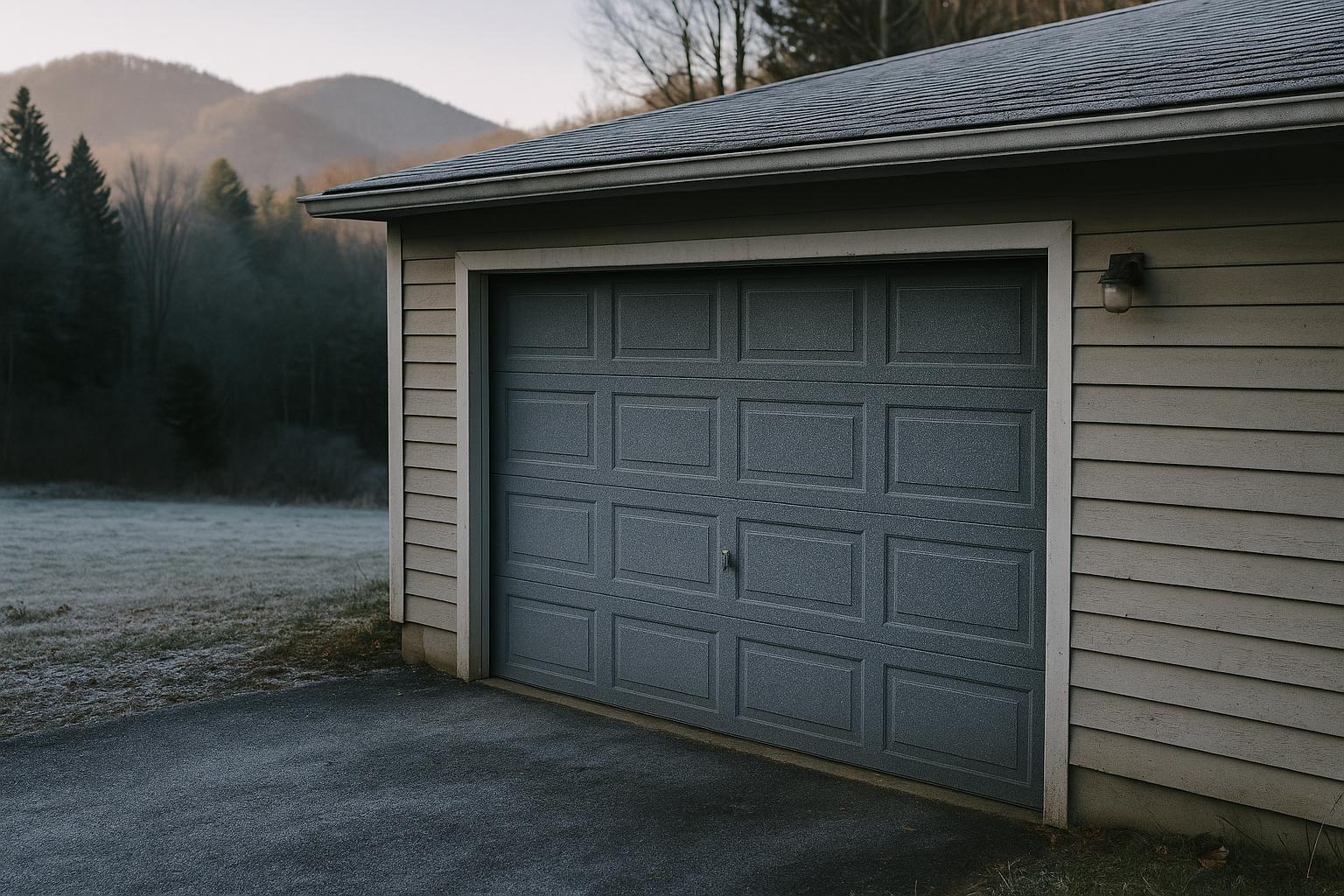
Why Cold Weather Wreaks Havoc on Garage Doors
If you've ever walked into your garage on a frigid Arden morning, pressed the button on your opener, and heard nothing but a groan or a click — you're not alone. Cold weather is one of the most common causes of garage door problems, and living in the mountains of Western North Carolina means we get our fair share of freezing temperatures between November and March.
The good news is that most cold-weather garage door issues are preventable. In this post, we'll walk you through the most common reasons your garage door won't open when temperatures drop, what you can do about it yourself, and when it's time to call a professional.
Common Reasons Your Garage Door Sticks in Cold Weather
1. The Weatherstripping Has Frozen to the Ground
This is the number one culprit. The rubber weatherstripping along the bottom of your garage door is designed to create a seal against drafts, rain, and pests. But when moisture collects underneath and temperatures dip below freezing overnight, that seal can literally freeze your door to the concrete floor.
If you try to force the door open — either manually or with the opener — you risk tearing the weatherstripping, damaging the bottom panel, or burning out your opener motor.
What to do: Use a heat gun or hair dryer to gently melt the ice along the bottom seal. You can also carefully chip away the ice with a flat plastic scraper. Avoid using metal tools that could damage the seal or the door itself.
2. Thickened or Hardened Lubricant
Your garage door relies on a system of moving parts — rollers, hinges, tracks, and springs — that all need proper lubrication to function smoothly. In cold weather, standard lubricants can thicken or harden, creating resistance that makes the door sluggish or completely stuck.
What to do: Apply a silicone-based or lithium-based garage door lubricant to all moving parts. These formulas are designed to perform in low temperatures. Avoid using WD-40 as a long-term lubricant — it's a solvent, not a true lubricant, and it can actually attract dirt and grime over time.
3. Contracted Metal Components
Metal contracts when it gets cold. This basic physics principle affects your garage door's springs, tracks, and hardware. Springs lose some of their tension, which means the opener has to work harder to lift the door. Tracks can shift slightly, causing alignment issues. And metal hardware can become brittle and more prone to cracking.
What to do: If you notice your door struggling to open or hear unusual popping or creaking sounds, it may be a sign that the cold is affecting your springs or hardware. A professional inspection can identify whether your springs need adjustment or replacement before they fail entirely.
4. Dead or Weak Opener Batteries
This one catches people off guard. Cold temperatures drain batteries faster, including the battery in your garage door remote and the backup battery in your opener unit. If your remote suddenly stops working on a cold morning, the battery may have lost its charge overnight.
What to do: Replace the batteries in your remote and check the backup battery in your opener. Keep spare batteries on hand during the winter months.
5. Misaligned or Dirty Safety Sensors
The photo-eye sensors near the bottom of your garage door tracks can be affected by frost, condensation, or debris kicked up by winter winds. If the sensors are blocked or misaligned, your door may refuse to close — or it may not respond at all.
What to do: Wipe the sensor lenses with a clean, dry cloth. Check that both sensors are properly aligned and that their indicator lights are steady. If the lights are blinking or off, gently adjust the sensors until they're pointing directly at each other.
How to Winterize Your Garage Door in Arden
Prevention is always easier and cheaper than repair. Here are some steps you can take before cold weather arrives to keep your garage door working reliably all winter long:
- Inspect and replace worn weatherstripping. If the rubber seal along the bottom of your door is cracked, brittle, or missing chunks, replace it before the first freeze. This prevents ice bonding and improves insulation.
- Lubricate all moving parts. Apply a cold-weather lubricant to rollers, hinges, tracks, springs, and the opener chain or screw drive at the start of every winter season.
- Test the balance of your door. Disconnect the opener and lift the door manually to about waist height. If it stays in place, the springs are properly balanced. If it falls or rises, the springs need adjustment — a job best left to a professional.
- Check the opener's force settings. Your opener may need a slight adjustment to its force settings during winter to account for the extra resistance caused by cold temperatures. Consult your owner's manual or call a technician for help.
- Clear the area around the door. Remove leaves, dirt, and standing water from the threshold area to prevent ice buildup under the door.
When to Call a Professional
Some cold-weather garage door problems are easy to handle on your own. But others require professional attention. You should call a garage door technician if:
- Your door is visibly sagging, warped, or damaged
- You hear loud snapping or banging sounds when the door operates
- The door won't stay open or slams shut unexpectedly
- Your springs appear stretched, rusted, or broken
- The opener motor runs but the door doesn't move
Attempting to repair or adjust garage door springs yourself is extremely dangerous. These components are under enormous tension and can cause serious injury if handled improperly.
Keep Your Garage Door Ready for Arden Winters
A garage door that won't open on a cold morning can throw off your entire day — especially when you're trying to get to work or school. But with a little preventive maintenance and the right knowledge, you can avoid most cold-weather garage door problems before they start.
At Arden Garage Door, we help homeowners throughout Arden, Asheville, Fletcher, and the surrounding communities keep their garage doors running smoothly year-round. Whether you need a quick tune-up before winter or an emergency repair on a freezing morning, our team shows up on time and gets the job done right.
If your garage door is giving you trouble this winter, don't force it — give us a call. We'll diagnose the problem and get you back on track.