
A Frustrating Problem That's More Common Than You Think
You press the button on your garage door remote, the door starts its descent, and then — just before it reaches the floor — it reverses and goes right back up. You try again. Same thing. Maybe it works on the third try, maybe it doesn't. Either way, you're left standing in your driveway in Arden wondering what on earth is going on.
This is one of the most common garage door complaints we hear from homeowners across the area, and the good news is that it's usually fixable. The bad news? Ignoring it can lead to bigger problems down the road. Let's walk through the most likely causes and what you can do about each one.
Understanding How Your Garage Door Safety System Works
Before we dive into troubleshooting, it helps to understand why your garage door is designed to reverse in the first place. Every modern garage door opener sold in the United States is required to have two safety mechanisms:
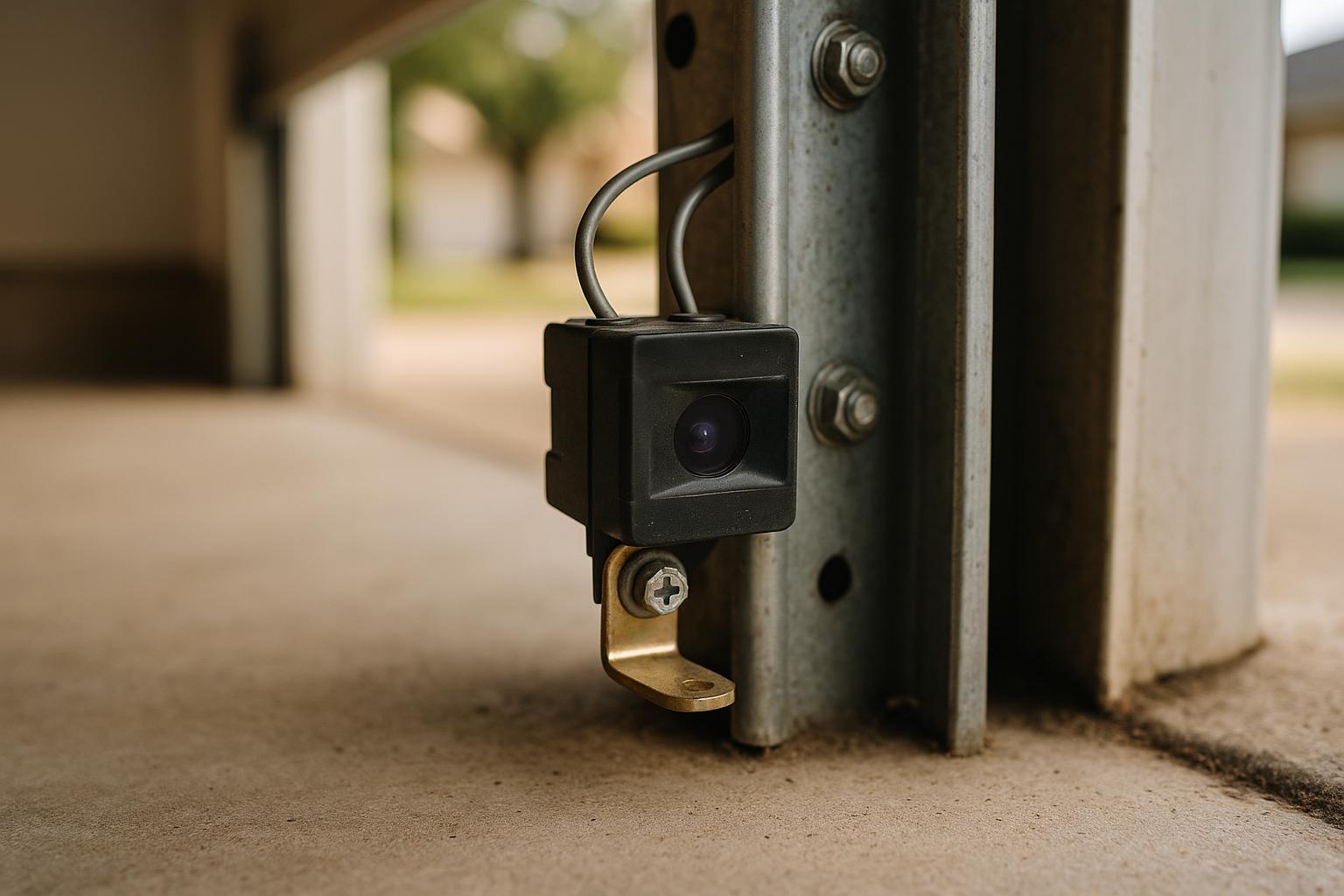
- Photo-eye sensors: These are the small sensors mounted near the bottom of your garage door tracks on either side. They send an invisible beam across the door opening. If something breaks that beam while the door is closing, the door reverses to prevent crushing a person, pet, or object.
- Auto-reverse mechanism: If the door physically contacts an object while closing, a pressure-sensitive system tells the opener to reverse direction immediately.
Both of these features exist to keep your family safe. So when your door reverses unexpectedly, it's usually because one of these systems thinks something is in the way — even when nothing is.
Cause #1: Misaligned Photo-Eye Sensors
This is the number one reason garage doors reverse before closing completely. The photo-eye sensors on either side of your door need to be perfectly aligned to maintain their infrared beam. Over time, they can get bumped, shifted by vibration, or knocked out of alignment by a stray bicycle or lawn mower.
How to Check
Look at the small LED lights on each sensor. On most models, both lights should be solid — typically one green and one amber. If one is blinking, the sensors are misaligned or obstructed.
What to Do
Gently adjust the sensor that's blinking until the light becomes steady. Make sure nothing is blocking the beam path — cobwebs, dirt, leaves, and even direct sunlight can interfere with the signal. Wipe the lenses with a soft cloth. If the problem persists after cleaning and realigning, the sensor or its wiring may need to be replaced.
Cause #2: Dirty or Obstructed Sensor Lenses
Living in the Arden area, we get our fair share of pollen, dust, and moisture — especially in spring and fall. A thin layer of grime on your photo-eye lenses can be enough to weaken the infrared beam and cause intermittent reversing. This is an easy fix that homeowners often overlook. Simply wipe both lenses with a clean, dry cloth every few months as part of basic garage door maintenance.
Cause #3: Incorrect Close-Limit Settings
Your garage door opener has limit settings that tell it exactly how far the door should travel when opening and closing. If the close-limit setting is off, the opener may think the door has hit an obstruction when it's actually just reaching the floor. The opener interprets the resistance as a safety issue and reverses.
How to Check
Watch the door carefully as it closes. If it touches the ground and then immediately bounces back up, the close limit is likely set too far. The opener is trying to push the door past the floor, meeting resistance, and triggering the auto-reverse.
What to Do
Most openers have limit adjustment screws on the back or side of the motor unit. Turning the close-limit screw in small increments can solve the problem. However, if you're not comfortable making this adjustment, it's best to call a professional. Setting the limit incorrectly can compromise the safety features of your system.
Cause #4: Damaged or Worn Tracks
If your garage door tracks are bent, dented, or have accumulated debris, the door may bind or stick as it travels downward. The opener senses the extra resistance and reverses to protect the system. Inspect your tracks visually for any obvious damage. You can clean minor debris yourself, but bent tracks should be handled by a garage door technician to avoid making the problem worse.
Cause #5: Broken or Worn Springs and Cables
Your garage door springs do the heavy lifting — literally. They counterbalance the weight of the door so the opener doesn't have to work as hard. When springs start to weaken or a cable frays, the door becomes heavier for the opener to manage. This added strain can trigger the auto-reverse mechanism.
Spring and cable issues are not a DIY repair. These components are under extreme tension and can cause serious injury if handled improperly. If you suspect a spring or cable problem, call a professional right away. Our team at Arden Garage Door handles spring replacements regularly for homeowners in Arden, Fletcher, Skyland, and the surrounding communities.
Cause #6: Wiring Problems
Frayed, damaged, or loose wiring between the sensors and the opener can send inconsistent signals, causing the door to reverse randomly. Rodents, moisture, and general wear can all damage wiring over time. If you've checked everything else and the problem continues, a wiring issue may be the culprit. This is another situation where professional diagnosis saves time and prevents further damage.
When to Call a Professional
Some of these fixes — cleaning sensors, checking alignment — are simple enough for any homeowner to handle. But if you've gone through the basics and your garage door is still reversing, it's time to bring in someone who can diagnose the issue properly. Continuing to force the door closed or overriding safety features is dangerous and can cause expensive damage to the opener or the door itself.
Here are signs you should pick up the phone:
- The door reverses inconsistently, sometimes working and sometimes not
- You hear grinding, scraping, or popping noises during operation
- The springs look stretched, rusty, or broken
- The tracks are visibly bent or warped
- You've adjusted the sensors and limits with no improvement
Keep Your Garage Door Running Smoothly
A garage door that won't close properly isn't just an inconvenience — it's a security risk for your home and everything inside your garage. Most reversing issues have straightforward solutions when caught early. Regular maintenance, including sensor cleaning, track inspection, and spring checks, can prevent many of these problems before they start.
If you're dealing with a garage door that keeps reversing and you can't figure out why, Arden Garage Door is here to help. We serve homeowners throughout Arden, Asheville, Hendersonville, Mills River, and the surrounding areas with honest, reliable garage door repair. Give us a call, and we'll get your door closing the way it should.